Talk
20 minutes + 10 minutes
Talk
A focused 20-minute presentation followed by 10 minutes of moderated discussion. Share original technical work, useful failures, research, lessons, or a field-tested point of view—not a product pitch.
20–22 January 2027
Call for proposals
We’re looking for original, technically substantive talks grounded in real systems, research, or operating experience.
The format
Thirty focused minutes
20 minutes + 10 minutes
A focused 20-minute presentation followed by 10 minutes of moderated discussion. Share original technical work, useful failures, research, lessons, or a field-tested point of view—not a product pitch.
The proposal
What we’ll ask for
The bar
What matters
Give the room a finding, method, failure, or perspective it cannot get from the standard conference circuit.
Show how the work actually functions. We value concrete methods, constraints, results, and lessons.
Leave space for questions, disagreement, and experience from elsewhere in the room.
Products may be part of the story, but sales pitches and product demonstrations presented as research are not.
Examples—not a required topic list
How a team designed identity, tool permissions, and human approval for a production agent—and what failure testing revealed.
How an LLM changed an authorized offensive or defensive workflow, measured against a human baseline—including where it introduced new errors.
How early customer behavior challenged a security product’s original threat model, and which technical or product decisions changed as a result.
How a growing team shipped an AI-enabled security capability under time and resource constraints while preserving least privilege, observability, and rollback.
We welcome other subjects. These examples show the level of focus and technical detail we hope to see in a proposal.
All accepted talks will be delivered in person in Whitefish. Friday’s discussion workshops and hackathon are organizer-led and are not accepting proposals. Have a working project rather than a talk? Apply to Lift, the Friday demo program. Meet the CFP Board helping shape the inaugural talk program.
CFP Board
The inaugural board
Four practitioners across security research, AI security, company building, and open source are helping shape the inaugural SkiSides talk program.

Director of Research at Volexity
Andrew Case is the Director of Research at Volexity, and has significant experience in incident response handling and malware analysis. He has conducted numerous large-scale investigations that span enterprises and industries. Case is a core developer of the Volatility memory analysis framework, and a co-author of the highly popular and technical forensics analysis book “The Art of Memory Forensics: Detecting Malware and Threats in Windows, Linux, and Mac Memory.” He has presented at major industry conferences, including Black Hat, DEF CON, RSA, SecTor, DFRWS, BSidesLV, BSidesNYC, and OMFW.

Founder, Azeria Labs
Maria Markstedter is the founder of the security training company Azeria Labs. She has spent her career focused on all things Arm, from reverse engineering to exploit development, sharing her passion for the architecture by teaching thousands of people around the world through her highly specialized courses. She is the author of the book Blue Fox: Arm Assembly Internals & Reverse Engineering (Wiley, 2023).
Maria has delivered keynote speeches at various conferences, including the Arm Research Summit and Black Hat USA 2023. Her work has earned her recognition as a Forbes "30 Under 30" honoree (2018) and Forbes Person of the Year in Cybersecurity (2020). Beyond her technical research, she serves on the Cybersecurity Advisory Committee for the fashion-conglomerate Inditex, and is an Adjunct Professor at Johns Hopkins SAIS. You can find her on X at @fox0x01.

Security Engineering Leader, Anthropic
Adam Russell is a security engineering leader at Anthropic, where he works on securing frontier AI systems. Adam has spent more than 20 years in technology and cybersecurity, with leadership roles across the private sector and public service, including Oracle, the Department of Defense, the Department of Energy, and the Department of the Navy. During nearly 13 years at Oracle, he spearheaded the Ethical Hacking Team, built security into Oracle Cloud Infrastructure, and most recently served as SaaS CISO, leading security for the company’s SaaS portfolio. He holds an MS in Computer Science from the Naval Postgraduate School and a BS in Computer Science from the University of Portland, where he later returned to teach as adjunct faculty.
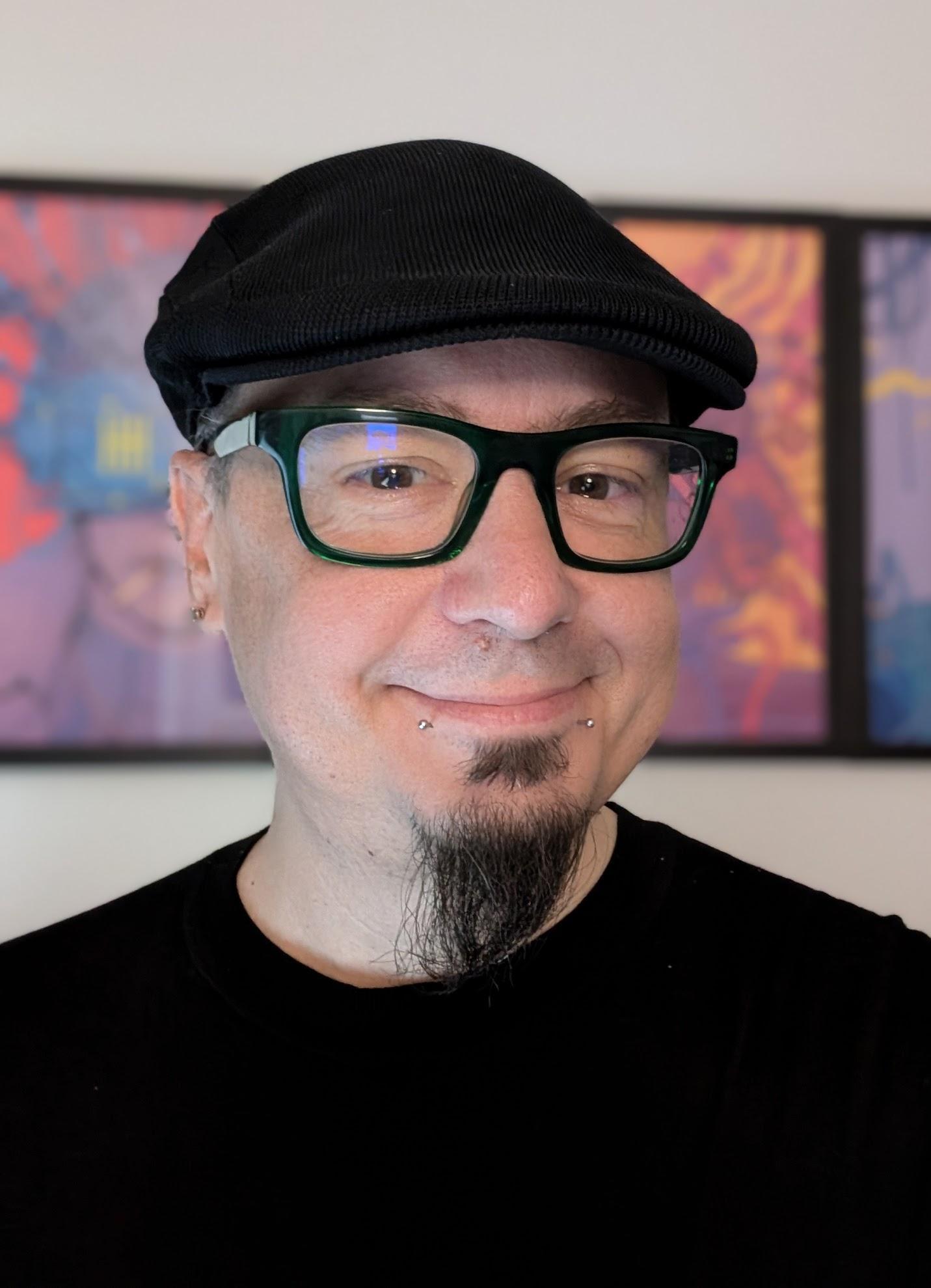
Co-Founder, The Vertex Project
Visi Stark is a hacker and founder with more than 25 years of experience in the cyber security industry. In 2016 he co-founded The Vertex Project to build Synapse, a central intelligence system which enables analytical teams to provide intelligence-driven insights to decision makers.
Previously, Visi was a Technical Director at Mandiant (now part of Google Cloud) where he led the team which proposed and authored the famous APT1 report detailing Chinese PLA hacking and economic espionage efforts against the US. He also led the team responsible for developing the intelligence analysis platform that they still use today.
Prior to joining Mandiant, Visi spent nearly 10 years in research, development, and operations of offensive cyber capabilities for the US Intelligence Community.
Visi has a long history of contribution within the hacking and open-source community. His efforts include the open-source release of Synapse, the code analysis tool Vivisect, and the invention of IMPHASH. Visi was also awarded a patent on a novel technique for using symbolic code analysis to determine shared code across architectures.
After winning DEFCON CTF in 2002, Visi founded Kenshoto which organized and implemented DEFCON CTF contents from 2005-2008.
SkiSides 2027
Send us the work, the evidence, and the conversation you want to start.
Submit a proposal